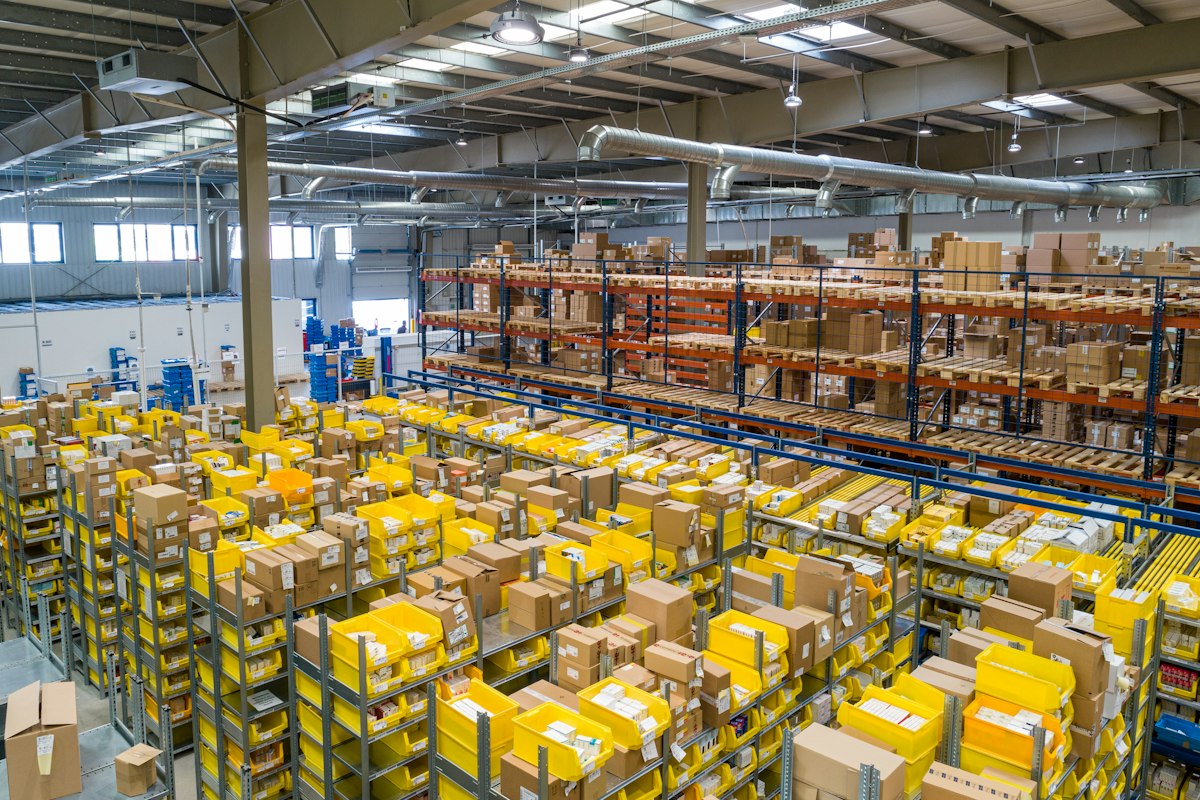
Warehouse robotics stopped being a future tense years ago. The new applied layer is not “a robot exists” — it is fleets large enough to need traffic intelligence.
Amazon has publicly described deploying more than a million robots across hundreds of facilities, and introduced DeepFleet, a generative AI foundation model trained on inventory-movement data to coordinate robot travel — with a claimed improvement on the order of ten percent in fleet travel time. That sits beside tangible machines already on floors: mobile drives moving storage pods, dock robots such as Proteus in U.S. sites, and next-generation systems still rolling toward broader European deployment. Reuters and company materials frame the same arc: AI plus robots as daily fulfillment infrastructure, not a lab tour.
The applied science is multi-agent coordination under physical constraints — aisles, payloads, humans, deadlines. A single robot is mechatronics. A million robots without collisions or gridlock is operations research with a learning loop.
For appliedscience.com, the hook is scale you can count: packages moving because perception, planning, and fleet AI already share the building with people.